
Kit Carson County Arrest Records and Court Charges
Arrest records are created on the law enforcement and jail side. In Kit Carson County, the Sheriff's Office handles law enforcement, detentions, courthouse security, and victim services. The sheriff page says the office covers Burlington, Flagler, Seibert, Vona, Stratton, Bethune, Interstate 70, and Highways 24, 59, and 385. After an arrest, a person may be booked at the Kit Carson County Detention Center, and the official detention page directs the public to Mobile Patrol for arrest lookup rather than a traditional county web roster.
Court charges are different. A charge record begins when the prosecutor files formal counts in court. The 13th Judicial District Attorney prosecutes felonies, misdemeanors, and some traffic offenses for Kit Carson County. Once filed, those charges become part of the court case and may appear in a docket, a CoCourts register of actions, or official court documents requested from the Clerk of Court. The full outcome belongs in the criminal court records file.
The Kit Carson County Sheriff's Office page gives the local law enforcement context for arrest records and sheriff functions.
That office context matters because sheriff records, jail custody checks, and court charge records do not come from the same database.
Find Kit Carson County Arrest Records and Charges
There is no single official public web page that combines arrest records, jail booking details, prosecutor charges, and criminal court outcomes. The county detention page points to Mobile Patrol for recent arrest lookup. The court system offers docket search, CoCourts summaries, and the Judicial Branch record request form. CBI offers Colorado criminal history checks, but its FAQ says warrant information is not included and some juvenile or sealed records are not public.
- Use Mobile Patrol or call the jail if the question is whether someone was recently arrested or is in custody.
- Use the Colorado docket search if the question is whether the person has a court date after charges were filed.
- Use CoCourts for a paid register-of-actions search that may show charges, plea, disposition, sentence date, and scheduled events.
- Use the Judicial Branch record request form for a complaint, information, ticket, protection order, disposition, or sentence order.
- Use CBI ICHC for Colorado criminal history, while remembering that it is not a warrant or court-document search.
The Sheriff Administration page identifies local front-office services, records requests, hours, phone routing, and CORA fee policy for sheriff-held records.
Sheriff records requests should be routed to the proper county custodian, while court documents should be requested through the Judicial Branch or Clerk of Court.
Charges Filed After Arrest
The charging document is the bridge between an arrest and the criminal court case. The arrest may start with law enforcement probable cause, a warrant, or a traffic stop. The prosecutor then decides what formal counts to file. In Kit Carson County, those prosecution decisions are handled through the 13th Judicial District Attorney for state criminal matters. One arrest can lead to no charges, one charge, or several counts with different severity levels.
| Complaint | Information | Indictment | |
|---|---|---|---|
| Filed By | Often law enforcement or prosecution depending on case type. | Prosecutor. | Grand jury process. |
| Common Use | Initial criminal accusation or misdemeanor filing. | Formal prosecution filing, often in felony matters. | Serious or grand-jury-reviewed cases. |
| Record Role | Starts or supports the case record. | Lists charges the prosecutor elects to pursue. | Lists charges returned through indictment. |
| Copy Route | Request from court if public and releasable. | Request from court if public and releasable. | Request from court, with sealed limits possible. |
Kit Carson County Charge Status
Charge status can change as a case moves. An initial charge may be amended, reduced through plea negotiations, dismissed, or resolved at sentencing. CoCourts may show charges, plea, disposition, and sentence date in the register of actions, but the official complaint, information, disposition, or sentence order must be requested from the court when a document copy is needed.
| Status | What It Means |
|---|---|
| Pending | The charge is filed and has not reached final disposition. |
| Amended | The prosecutor or court record reflects a changed charge description, count, or statute. |
| Reduced | The charge level or offense is lowered, often as part of plea negotiations. |
| Dismissed | The charge is ended without a conviction on that count. |
| Disposed | The court has entered an outcome such as conviction, dismissal, acquittal, or deferred result. |
Charges vs Convictions
A filed charge is not the same as a conviction. Kit Carson County arrest records may show an arrest event, and court records may show charges after arrest, but neither fact alone proves final guilt. The final meaning depends on the plea, verdict, dismissal, or sentence order in the criminal court record.
| Charge | Conviction | |
|---|---|---|
| Legal meaning | An allegation filed in court. | A final or accepted finding of guilt. |
| When it appears | Early in the case after filing. | After plea, verdict, or disposition. |
| Can change | May be amended, reduced, added, or dismissed. | May be affected by appeal, sealing, or later court order. |
| Best record | Complaint, information, charge list, or register of actions. | Disposition record, sentence order, or judgment. |
Sealed and Expunged Charge Records
Colorado law allows some arrest, non-conviction, and conviction records to be sealed if statutory rules are met. Juvenile records have separate confidentiality and expungement rules. CoCourts excludes sealed cases and suppressed or confidential filings. CBI also says juvenile arrest information is not released to the public through its criminal history system.
| Sealed | Expunged | |
|---|---|---|
| Public access | Hidden from ordinary public search after implementation. | Removed or treated under a statutory expungement process. |
| Common context | Some arrest, non-conviction, and conviction records. | Often juvenile matters, depending on statute. |
| Agency access | Courts and law enforcement may retain authorized access. | Access depends on the order and statute. |
| Search impact | Vendor searches should exclude sealed records. | Public-facing results should not display covered records. |
Charge Codes and Severity
Charge records can include count numbers, statute references, offense descriptions, case number, court, filing agency, bond or advisement events, and a status or disposition for each count. Severity matters because District Court handles felonies, while County Court handles misdemeanors, traffic offenses, traffic infractions, small claims, and limited civil matters. Some traffic-related criminal cases can move from a traffic stop to a criminal misdemeanor or felony record depending on the offense.
A charge code should be read with the disposition. A charge that begins as a felony may be amended. A misdemeanor may be dismissed while another count results in a plea. A traffic charge may create both a court record and a separate DMV driver-history consequence. Do not treat the first charge list as the final outcome.
Statewide Criminal History Limits
The CBI Internet Criminal History Check is useful when a Colorado-only criminal history check is needed. The CBI FAQ says one-time users can search without an account, and account users can use batch or search-history functions. Research captured fees of $6 for results viewed online and $13 for manual processing. These are CBI search fees, not court copy fees.
CBI criminal history is not a full Kit Carson County court charge file. It does not include warrants, sealed records, juvenile records, out-of-state records, or federal records. It also does not provide the court pleadings or sentence order that may be needed to verify how a filed charge ended.
For the court charge itself, use the court channels first. A register of actions may show the charge, plea, disposition, and sentence date, while the complaint, information, or sentence order must be requested from the court. Sheriff or jail records can explain arrest and custody, but they do not replace the official filed charge record.
For the court charge itself, use the court channels first. A register of actions may show the charge, plea, disposition, and sentence date, while the complaint, information, or sentence order must be requested from the court. Sheriff or jail records can explain arrest and custody, but they do not replace the official filed charge record.
DA and Public Defender Role
The 13th Judicial District Attorney's Office files and prosecutes felony, misdemeanor, and some traffic charges for Kit Carson County. The Sterling Office serves residents of Kit Carson, Logan, Phillips, Sedgwick, Washington, and Yuma counties. The Colorado State Public Defender Sterling Office serves Kit Carson County defendants who qualify for appointed counsel.
The Colorado State Public Defender Sterling Office page lists the office serving Kit Carson County, including address, phone, email, and office contacts.
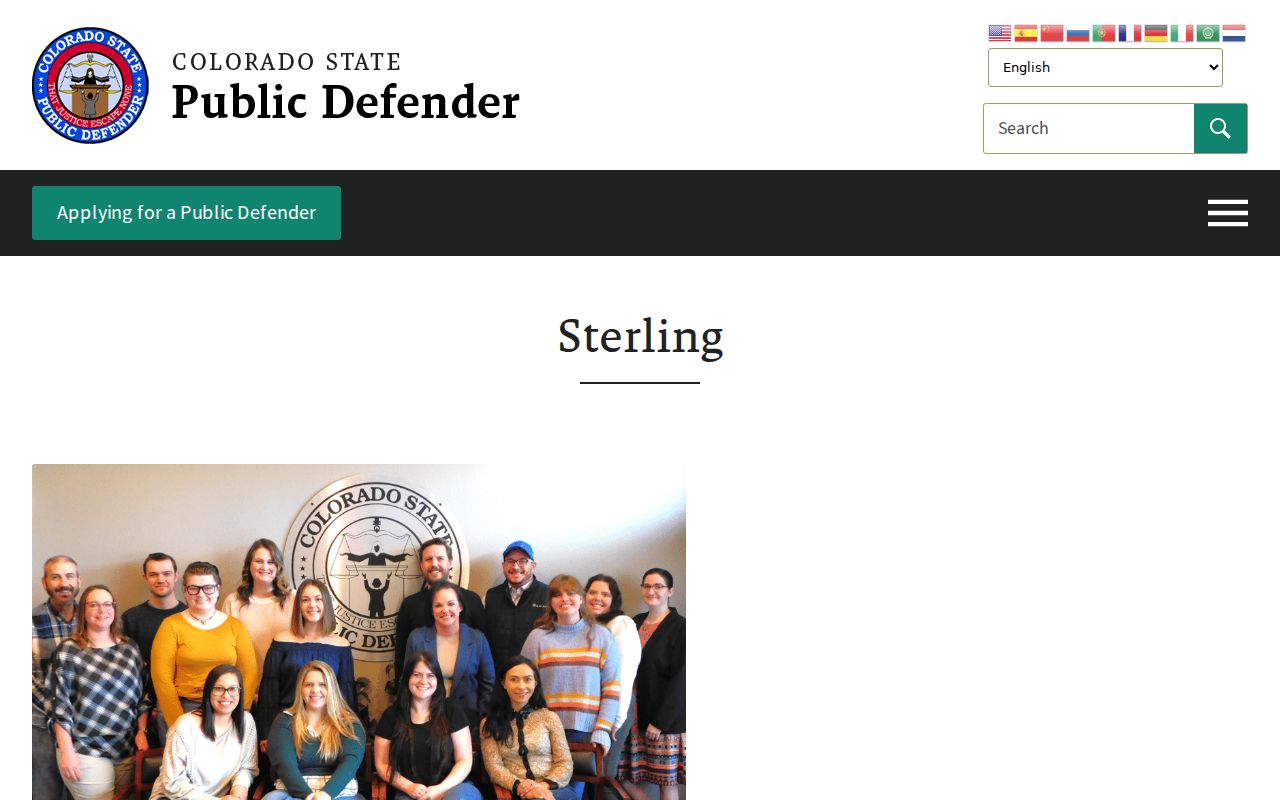
Defense counsel can help interpret pending charges, but the official filed charge record remains with the court after a case opens.
Restricted Kit Carson County Charge Records
Juvenile charges, sealed cases, suppressed documents, protected-party data, active investigation details, Social Security numbers, street addresses, and some financial or victim information may be withheld or redacted. A missing online record does not always mean no arrest or no charge exists. It may mean the matter is restricted, municipal, sealed, juvenile, or held by a different custodian.
Important: Arrest records and charge records are not consumer reports and should be verified with the official custodian before use.