
Kit Carson Probate Division
Probate in Kit Carson County is routed through the District Court and Combined Court. The Colorado Judicial Branch judges-and-staff page identifies Trisa M. Keyser as Clerk of Court, Jury Commissioner, and Probate Registrar. That makes the local court clerk the central contact for probate letters, wills, applications, petitions, claims, closings, guardianship, conservatorship, and protective-proceeding records.
Probate Division of District Court
Kit Carson County Combined Court
1650 Donelan, Suite 301
Burlington, CO 80807
719-346-5524 x3
KitCarsonClerksOffice@judicial.state.co.us
Protective Proceedings Monitor
Meredith Sparks
13th Judicial District
970-526-3958
Guardianship and conservatorship monitoring contact listed by the Judicial Branch
Colorado probate records are case records, so county CORA is not the ordinary route for probate copies. Use the Judicial Branch request form or contact the Probate Registrar when the needed document is a court filing.
Probate matters can include estates, wills, trusts, applications, petitions, letters, claims, closing documents, date-of-death information, guardianship, conservatorship, and other protective proceedings. In Kit Carson County those matters route through the Combined Court rather than a standalone probate courthouse. That means the same clerk office used for District Court records is also the local probate access point.
Request Kit Carson Probate Records
The Colorado Judicial Branch record/document request form has a Probate category with specific document options. CoCourts states that probate case types are not included on its vendor site, so a paid CoCourts search should not be treated as the main probate channel. If the probate file has confidential or protected information, the court may require a U.S. government-issued photo ID.
A strong probate request gives the court enough identifying detail to locate the file. If no case number is known, provide the decedent or protected person's full name, approximate filing year, date of death when relevant, petitioner names, and the document sought. Letters may be needed for banks, vehicles, real property, or estate administration. Wills, petitions, claims, and closing documents may have different access limits depending on the file.
| Field Label | Type | Required | Options / Format Notes |
|---|---|---|---|
| Case Number | Text | No | Helpful if known |
| Case Type | Dropdown | No | Select Probate |
| Year case was filed | Dropdown | No | Form showed years back to 1873 |
| County/location | Dropdown | No | Select Kit Carson County |
| Party Information | Text | Yes | Decedent, estate name, petitioner, protected person, or party names |
| Letters, Will, Trust | Checkboxes | No | Probate document choices |
| Application, Petition, Closing, Claims | Checkboxes | No | Probate document choices |
| Certified/exemplified | Checkbox | No | $20 per document estimate |
- Identify the decedent, protected person, estate name, filing year, or case number if known.
- Use the Judicial Branch record/document request form and select Kit Carson County and Probate.
- Check the specific probate documents needed, such as letters, will, petition, claims, or closing.
- Request certification when banks, real estate offices, vehicle offices, or another court require a certified copy.
- Contact the Probate Registrar if the file may be restricted, old, off site, or tied to guardianship or conservatorship.
Kit Carson Probate Terms
Probate terms can be terse in a register, request form, or court order. The following terms appear often in estate and protective-proceeding records.
- Testator
- A person who made a will.
- Executor
- A person named to carry out a will, often called a personal representative in Colorado probate practice.
- Intestate
- Dying without a valid will.
- Guardianship
- A court case involving personal care and decision-making authority for a protected person.
- Conservatorship
- A court case involving management of a protected person's money or property.
- Letters
- A court document showing authority of a personal representative or fiduciary.
Kit Carson Probate Copy Fees
The research did not locate a local probate filing fee schedule beyond the court copy and request fees. Use only the Judicial Branch copy/request fee data when describing probate record access costs.
Copy fees are not the same as filing fees. A person opening a probate case may need a filing-fee schedule from the court or Judicial Branch forms, while a person requesting an existing probate record uses copy, certification, search, retrieval, and redaction fees. The research file supports the record-copy fees below, not a full probate filing-cost table.
| Item | Fee |
|---|---|
| Copy per page | $0.25 |
| Certified or exemplified copy | $20 per document |
| Name search | $5 |
| Off-site case file retrieval | Actual cost |
| Research/redaction | $30/hour after first hour, billed in 15-minute increments |
Note: The local probate filing fee schedule, small-estate threshold, and will-safekeeping deposit option were not located in official Kit Carson County sources.
Federal Records Are Separate
State probate files are not federal PACER records. Federal record systems and District of Colorado pages matter only when a separate federal case exists. Use those sources for federal cases, not for Kit Carson County probate letters or wills.
The distinction matters because federal courts in Colorado handle federal civil, criminal, bankruptcy, habeas, and other federal matters. A decedent's estate file, guardianship, or conservatorship in Kit Carson County remains a state District Court probate matter unless a separate federal case exists. Bankruptcy can affect an estate or asset dispute, but it does not move the county probate file into PACER.
PACER is the federal electronic records system for federal courts.
PACER can matter if a related federal case exists, but it is not the local probate access point.
The PACER District of Colorado CM/ECF lookup identifies federal electronic filing access for the U.S. District Court in Colorado.
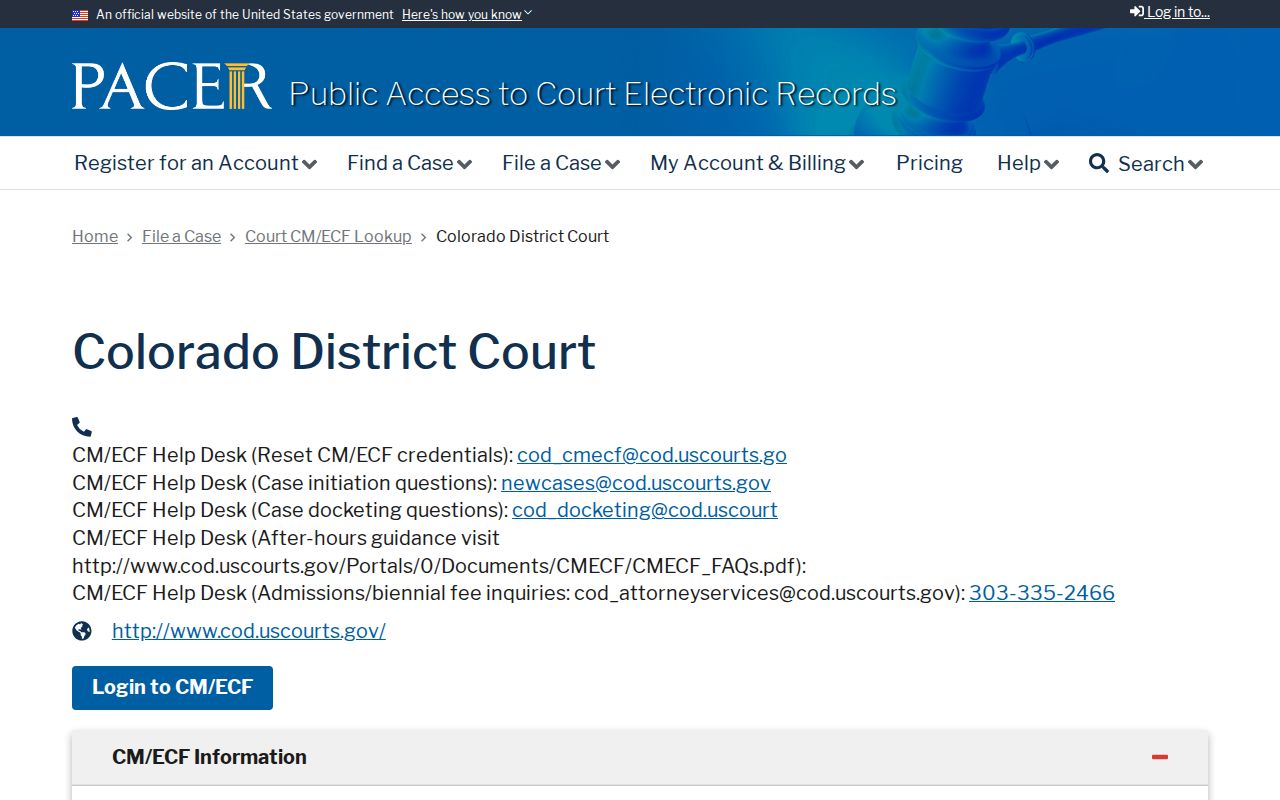
That lookup is for federal District of Colorado records, not the county Probate Division of District Court.
The U.S. District Court for the District of Colorado handles federal trial-court matters for Colorado.
Local estate, guardianship, and conservatorship requests still route to the Kit Carson County Combined Court.
Restricted Probate Documents
Probate records can include protected personal, medical, financial, or minor-related information. Guardianship and conservatorship files may have access limits even when the existence of a case is public. The Judicial Branch request form warns that probate records, suppressed cases, juvenile matters, or confidential documents may require a U.S. government-issued photo ID.
Older probate files may also require retrieval time or actual retrieval cost. If the case number is unknown, provide the decedent or protected person's name, approximate filing year, date of death if relevant, and the names of petitioners or interested parties.
Guardianship and conservatorship records deserve extra care because they may involve protected adults, minors, medical facts, financial accountings, and monitoring reports. The Judicial Branch lists a Protective Proceedings Monitor for the 13th Judicial District, Meredith Sparks, at 970-526-3958. That contact is not a substitute for the clerk's record request process, but it is a local official point for protective-proceeding monitoring questions.
Probate users should also distinguish a case summary from a usable legal copy. Banks, title companies, vehicle offices, and other courts often need certified letters or certified orders, not a screen print or informal summary. If a file is older or off site, the court can assess actual retrieval cost. If the requested record contains confidential information, the clerk may limit the release, redact the copy, or ask for identification before processing.
For estates, helpful request facts include the date of death, the estate name, the personal representative name, and the document type. For guardianship or conservatorship, helpful facts include the protected person's name, case year, petitioner, and whether the request is for letters, orders, accountings, or monitoring-related records.
Probate records also overlap with recorder and marriage records only in limited ways. A deed, lien, or recorded document tied to an estate may be in the Clerk and Recorder's records, while the authority to act for the estate comes from the probate case. Search the court for letters and orders. Search the recorder for recorded instruments.
Because CoCourts excludes probate case types, do not spend a paid vendor search expecting to find the local probate file. Start with the Judicial Branch request form or the Probate Registrar instead. That approach is also better for certified letters, wills, and protected-proceeding records because the clerk can screen the request for access limits, identification needs, copy fees, and retrieval issues before local processing in Burlington courthouse records.